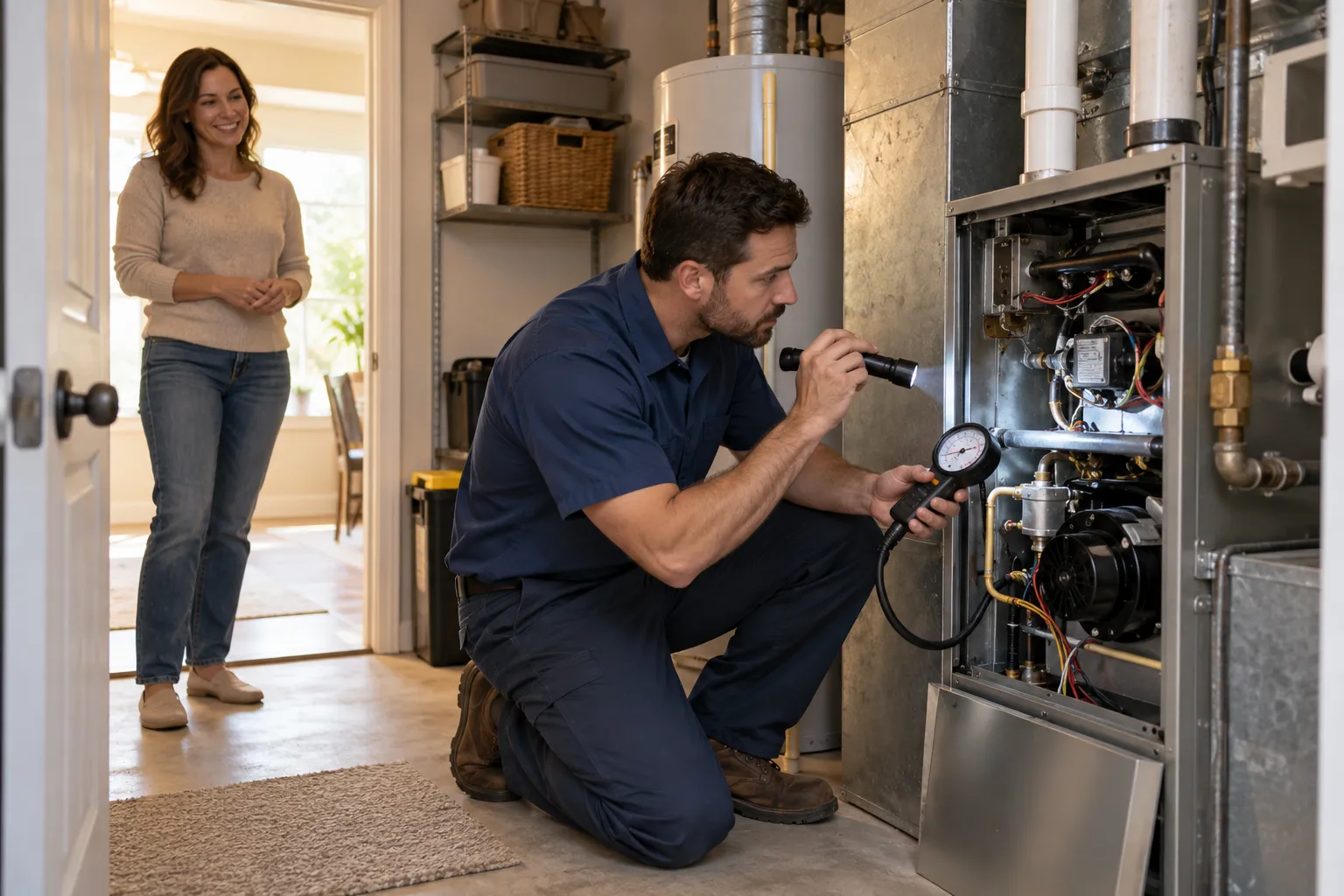
A furnace works like a small fire in a metal box, with a fan that pushes the warm air through your vents. When one part in that chain stops, the whole house goes cold. The cause is often small, like a dirty filter, a worn igniter, or a sensor coated in dust.
Desperateangeles Heating & Air is a referral service. We explain what is likely happening and what to check first. Then we connect you with an independent provider in our network who does the work. Providers do the work, not Desperateangeles Heating & Air. In and around the Tampa area, furnaces often sit unused for months and then run during a short cold snap. That long rest can show up as a weak start. This page walks you through the first hour, what repairs usually involve, and how to compare your options.
Smell Gas? Pause and Step Outside
If you smell rotten eggs or sulfur, stop reading and act. Think of it like a smoke alarm. The smell is the warning, and it is not the moment to investigate.
Leave the house with everyone, pets included. Do not flip light switches, use a lighter, or run a garage door opener. From outside, call 911 or your gas utility's emergency line. Stay out until they say it is safe. A provider can look at the furnace after that.
Other Warning Signs Worth Respecting
A carbon monoxide alarm that sounds, soot around the furnace, or headaches and dizziness while the heat runs all mean the same thing. Get fresh air and call emergency services. Carbon monoxide has no smell, so the alarm is your early notice.
Your First Hour: Pause, Then Check
When the heat stops, take one slow breath. In a warm climate, a furnace may sit idle for most of the year. Like a bicycle left in the garage, it can be stiff on the first ride. These checks are safe for most homeowners and take a few minutes.
Check the Thermostat
Make sure it is set to heat, not cool or off. Raise the setting a few degrees above room temperature. Replace the batteries if the screen is blank or dim.
Check the Power
Look at the breaker panel for a tripped switch. Many furnaces also have a wall switch near the unit that looks like a light switch. Someone may have flipped it by mistake.
Check the Filter
A clogged filter is like trying to breathe through a wet towel. The furnace overheats and shuts itself off for safety. Slide the filter out, and if you cannot see light through it, swap it for a new one.
Know When to Stop
Do not open the burner area, relight a pilot you are unsure about, or reset the unit again and again. If the checks do not help, it is time for a provider.
How Timing Changes the Outcome
Heat problems move in stages, much like a small leak under a sink. Early on it is easy to fix. Left alone, it grows.
The First Few Hours
The house cools slowly, especially a concrete block home that holds its temperature. This is a smart moment to run the checks above and ask for help. Small problem, early.
The Next Day
Indoor air keeps dropping. If you use space heaters, keep them away from curtains and bedding, and never leave them running while you sleep. Do not use an oven to heat the home.
After Several Days
A part that was failing slowly can strain other parts. A weak igniter can turn into repeated lockouts, and a stalled blower can overheat the unit. Waiting rarely makes the repair smaller.
Common Signs Your Furnace Needs Repair
The furnace gives hints before it quits. Watch for these:
- Air from the vents is weak, lukewarm, or cold.
- The unit turns on and off in short bursts.
- You hear banging, squealing, or rattling.
- The pilot or burner flame looks yellow or flickers.
- Your energy bills climb with no change in habits.
- The house heats unevenly from room to room.
What Happens During a Furnace Repair Visit
A good visit follows a simple order, like a doctor checking symptoms before writing a prescription. The provider asks what you noticed, then checks the thermostat, power, filter, and airflow. Next comes the burner or heating element, the igniter, the flame sensor, and the safety switches.
The provider should also check for gas leaks and carbon monoxide around the unit. Then they explain what failed, what the fix involves, and what it costs in writing before starting.
Common Furnace Repairs
Most furnace calls come down to a short list of parts:
- Igniter or pilot: the spark that starts the flame wears out.
- Flame sensor: a dusty sensor shuts the burner off too soon.
- Blower motor or capacitor: the fan stops pushing warm air.
- Control board: the brain of the unit misreads signals.
- Thermostat wiring: the furnace never gets the message to start.
- Heat strips: in electric systems, these are the heating elements.
Repair or Replace Your Furnace?
Think of an old car. One repair is fine. Repeated repairs add up, and at some point a newer one makes more sense. Furnaces often last 15 to 20 years, though that varies with use and upkeep.
Replacement may be worth a look if the unit is older, needs a costly part, has a cracked heat exchanger, or keeps failing. If you are searching for furnace replacement near me, ask a provider to compare the repair price against a new unit in writing. Then you can decide with all the numbers in front of you.
Questions to Ask the Provider
A few plain questions keep the visit clear:
- Is there a fee for the diagnosis, and does it apply to the repair?
- Can you put the quote in writing before work begins?
- Is the part new, and does it carry a warranty?
- How long will the repair take?
- Do you check for gas and carbon monoxide safety?
Why Local Conditions Matter
Warm, humid areas ask a lot of heating and cooling equipment. Many furnaces share a closet or attic space with the air conditioner, so moisture, dust, and heat can wear on parts all year. A provider who knows local homes will check for rust, drain issues, and dirty components, not only the one part that failed.
Ready to Get the Heat Back On?
You have done the safe checks. Now let a provider take over. Providers in our network can look at the problem, explain it plainly, and give you a written quote. Request a callback to check provider availability in your area, or request an estimate and compare your options without pressure.
What's Included
Safety Checks
The provider looks for gas leaks and carbon monoxide around the furnace before any other work begins.
Full Diagnosis
Thermostat, power, filter, igniter, sensor, and blower are checked in order to find the cause.
Clear Quote
You get the problem, the fix, and the price explained plainly and in writing.
Repair and Test
The provider fixes the part, runs the furnace through a full cycle, and confirms the heat is steady.
Typical Furnace Repair Costs
These are typical U.S. ranges, and your price depends on the part, the furnace type, and the home. Always ask for a written quote before work starts so there are no surprises.
| Item | Typical range | Notes |
|---|---|---|
| Diagnostic visit | $75 – $200 | Some providers apply it to the repair |
| Igniter or pilot part | $100 – $400 | Common wear item on older units |
| Flame sensor cleaning or swap | $75 – $250 | Often a quick, small repair |
| Blower motor or capacitor | $150 – $1,000 | Motors cost more than capacitors |
| Control board | $300 – $800 | Varies by brand and model |
| Heat exchanger repair | $1,000 – $3,500 | Often leads to a replacement talk |
How It Works
Stay Safe First
Smell gas or hear a carbon monoxide alarm? Get outside and call emergency services before anything else.
Run Simple Checks
Check the thermostat, breaker, wall switch, and filter. These fix more calls than you might expect.
Reach a Provider
Request a callback to check availability, or request an estimate through the form.
Review the Written Quote
Ask the provider to explain the repair and price before work begins.
Why Call Desperateangeles Heating & Air
Plain-Word Explanations
You learn what is likely wrong and why it happens before you talk to anyone.
Independent Providers
Providers in our network are independent businesses that do the work themselves.
No Obligation
Request an estimate and compare it. You decide whether to move forward.
Calm Guidance
Simple steps help you stay safe and steady during the first hour.
Other Services
Need furnace repair in Tampa?
Tell us what your system is doing. Send a request or email contact@desperateangeles.property, and we will point you to a local provider in our network.
No obligationFurnace Repair FAQ
Why is my furnace blowing cold air?
Common causes include a thermostat set to fan only, a dirty filter, a failed igniter, or a tripped safety switch. Try the simple checks first. If the air stays cold, a provider can find the cause.
How long does a furnace repair take?
Many repairs take one to a few hours, depending on the part and whether the provider has it on hand. Ask for a time estimate when you get your written quote.
Is it safe to use space heaters while I wait?
Only with care. Keep them away from curtains, beds, and cords, plug them directly into the wall, and never leave them on while sleeping. Never use an oven or grill for heat.
Reach a local provider
Tell us what your system is doing. Send a request or email contact@desperateangeles.property, and we will point you to a local provider in our network.
No obligation